
Menopause Management Treatment in Dehradun
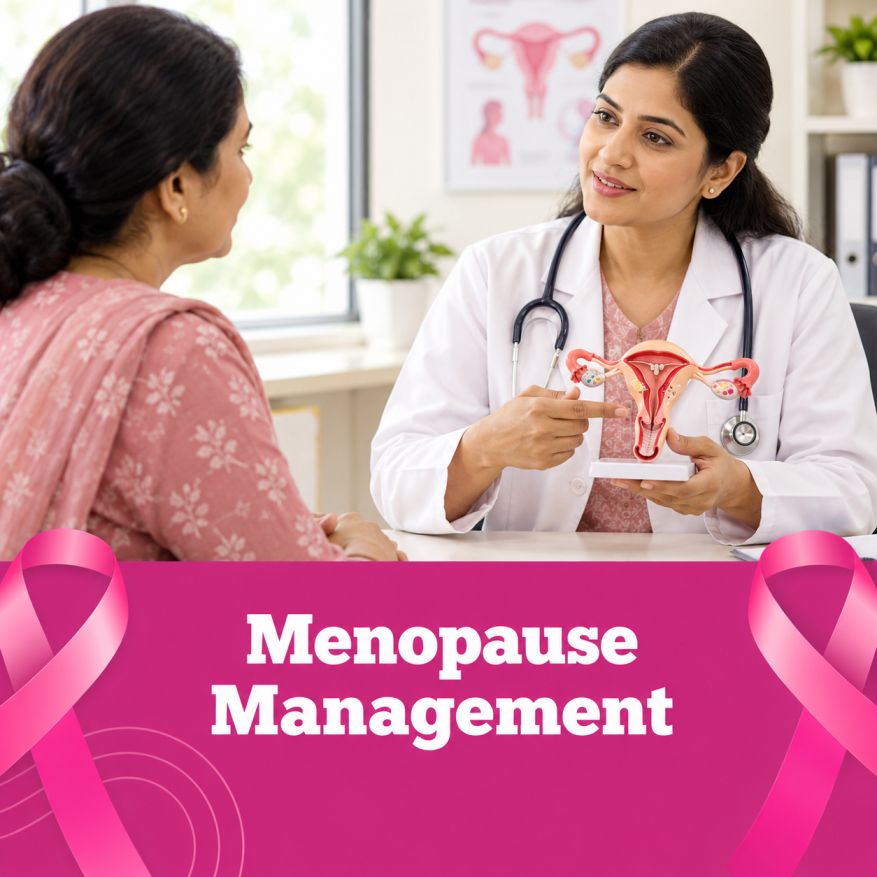
Menopause Management Treatment in Dehradun
Menopause is a natural stage in a woman’s life that marks the end of menstrual cycles and reproductive years. It usually occurs between the ages of 45 and 55 and is diagnosed when a woman has not had a menstrual period for 12 consecutive months.
During menopause, the body undergoes hormonal changes, particularly a decrease in estrogen and progesterone levels. These hormonal changes can lead to a variety of physical and emotional symptoms that may affect a woman’s quality of life.
Common Symptoms of Menopause
Hot Flashes
Sudden feelings of warmth, often affecting the face, neck, and chest.
Night Sweats
Excessive sweating during sleep, which may interrupt restful sleep.
Irregular Periods
Changes in menstrual cycle frequency, duration, or flow during perimenopause.
Vaginal Dryness
Reduced natural lubrication that may cause irritation or discomfort.
Urinary Changes
Increased urgency, frequent urination, or recurrent urinary discomfort.
Difficulty Concentrating
Some women experience forgetfulness or difficulty focusing.
Why Is Personalised Menopause Care Important?
What to Expect During a Menopause Consultation?

Frequently Asked Questions About Menopause Management
Menopause commonly occurs between 45 and 55 years of age. The average age is around 51, although it can vary from woman to woman.
Yes. Several options, including lifestyle changes, non-hormonal medicines, and hormone therapy for suitable women, can help manage symptoms.
HRT can be effective for appropriate patients, but it is not suitable for everyone. Its benefits and risks should be discussed with a healthcare professional before starting treatment.
The duration varies. Some symptoms may last for a few months, while others, particularly hot flashes, can continue for several years.
No. Some women experience mild symptoms that do not require medical treatment. Management depends on symptom severity and individual health needs.