
Pelvic Exenteration Surgery in Dehradun
What Is Pelvic Exenteration?
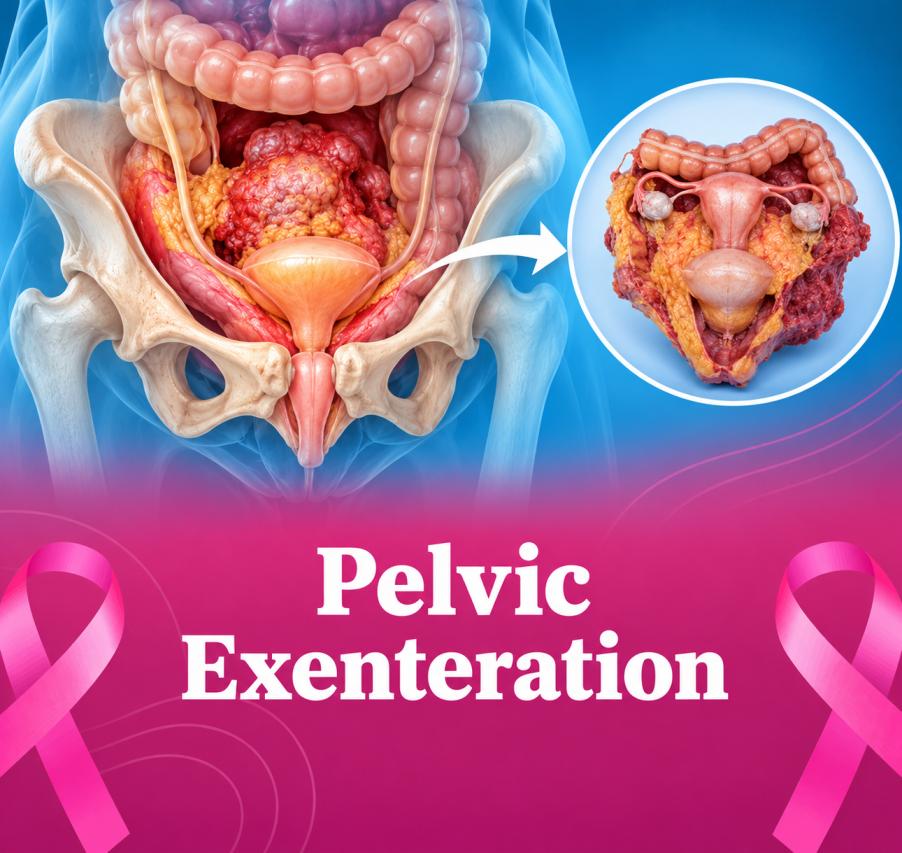
Pelvic exenteration is an extensive surgery in which the reproductive organs are removed together with the bladder, the rectum or both, so that cancer confined to the central pelvis can be removed completely. It is also called exenteration surgery.
It is not a routine treatment. Doctors consider it when cancer of the cervix, vagina, vulva or uterus has come back or has not cleared after radiation, chemotherapy or earlier surgery, and when scans suggest the disease can be removed entirely. For some women it offers a chance of cure; for others it can relieve pain and distressing symptoms such as bleeding, discharge or a fistula, an abnormal passage between organs.
Because it changes how the body passes urine or stool and how it functions afterwards, the decision is taken slowly, with full information and with time for questions.
Who May Be Considered for Pelvic Exenteration?
It is usually considered for women whose cancer is limited to the pelvis, has not responded to other treatment or has returned, and who are fit enough for a long operation and recovery. Typical situations include:
It is generally not suitable when cancer has spread to distant organs, when the tumour cannot be removed completely, or when general health makes major surgery unsafe. Sometimes the surgeon finds during the operation that the disease cannot be removed safely, and the procedure is stopped. This is discussed with you in advance.
Have a recurrence report and want a surgical opinion?
Book a Consultation →How Is the Decision Made?
Before surgery is offered, Dr. Kansal builds a complete picture of the cancer and of your health. This usually involves:
History & Pelvic Exam
A detailed history, pelvic examination and review of your earlier treatment, including radiotherapy and chemotherapy records.
Biopsy Confirmation
Biopsy confirmation of the recurrence or residual cancer.
Advanced Imaging
Imaging such as MRI of the pelvis and CT or PET-CT to check that the disease has not spread outside the pelvis.
Fitness & Nutrition Checks
Blood tests, heart and lung fitness checks, and nutritional assessment.
Pre-Surgery Counselling
Counselling about stomas, sexual function and recovery, including meeting a stoma care nurse where possible.
Not every woman who is assessed goes on to surgery. If another treatment is more suitable, Dr. Kansal will say so.
Recovery After Pelvic Exenteration
Hospital stay is often around 7 to 10 days and can be longer, and full recovery takes weeks to months.
Pain Management
Pain is managed with a plan agreed with the anaesthesia team.
Drains & Catheters
Drains, a urinary catheter and stents are common in the early days and are removed in stages.
Stoma Care Training
Stoma nurses teach you and your family how to manage the stoma before you go home.
Ongoing Rehabilitation
Nutrition, physiotherapy and wound care continue after discharge.
Follow-Up Visits
Follow-up visits and scans check for healing and for any return of cancer.
Life After Surgery: Stomas, Intimacy and Emotional Wellbeing
Most women adapt over time, and quality of life improves for many, but it takes patience.

Frequently Asked Questions
It can cure some women whose cancer has returned or persisted only within the pelvis, and it can relieve pain and other symptoms in others. It is not a guaranteed cure. The outcome depends on the type and stage of the cancer, whether the tumour can be removed completely and your overall health. Dr. Kansal will explain what is realistic in your case after reviewing your scans and reports.
Often, yes, but it depends on the type of operation. After an anterior or total exenteration, urine is usually diverted through a urostomy. After a posterior or total exenteration, a colostomy may be needed, although in some women the bowel can be reconnected. A stoma care nurse can teach you how to manage it before and after surgery.
A hysterectomy removes the uterus, and sometimes the cervix, ovaries and tubes. Pelvic exenteration goes much further and removes neighbouring organs such as the bladder, rectum or both, along with the reproductive organs. It is therefore reserved for cancer that has returned or spread within the pelvis.
Most women adapt over time, but the operation does change body function and appearance, and recovery needs patience. Options such as vaginal reconstruction, counselling and sexual health support can help. Dr. Kansal's team can guide you on these before surgery so that you know what to expect.
Yes, and many women do. Because this is a major operation, it is reasonable to have your scans and reports reviewed by a gynae oncology surgeon before you decide. You can book a consultation with Dr. Kansal and bring your records.